England class enjoyed making fossils in science today!


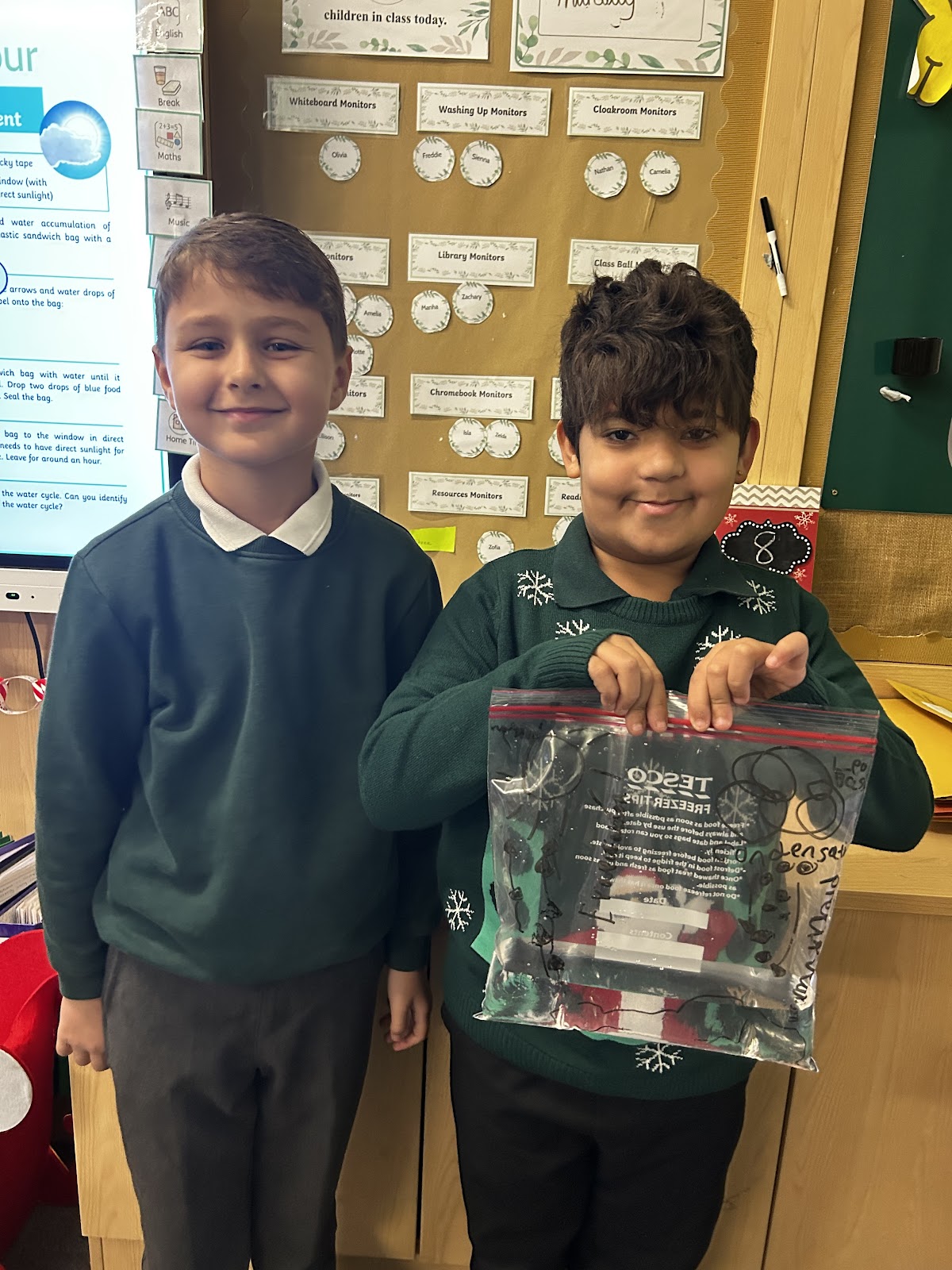
Today, Germany class created their own miniature water cycles so they can watch all the different processes in real life.




Scotland Class were looking at the properties of different rocks in Science this week. They explored how brittle the rocks were, whether they sank or floated and also whether acid (they used vinegar) caused a chemical reaction when it was applied to the rock. They discovered that the clay was brittle, the sandstone and granite was hard and all of the rocks sank when they put them in water. The clay was the only rock that changed when vinegar was applied to it. They had lots of fun carrying out the tests and learnt even more about rocks.


After learning about the different processes that happen through the water cycle we wanted to put it into action and so we carried out our very own experiment. Today was awesome! We made our own water cycles and it was fun! It helps you understand how water moves through the environment.
We used a sandwich bag and put some water inside then made sure it was sealed nice and tight. We then taped them to the window. We also labelled the different processes that we can expect to happen during our observation.
I wonder what is going to happen to the water? Over the next few days, we will observe them very closely to see what happens.


England class enjoyed being scientists and testing rocks. We learnt about the properties of igneous, metamorphic and sedimentary rocks.


Last week in Science year 4 were testing the temperatures of hot, warm and cold water. We had three beakers one with hot water, one with warm and one with cold water. The children were asked to test the temperature of each one and record the readings. The children had to work together to make sure that everyone was ready to do their part in the experiment such as putting the thermometer in the water, or starting and stopping the stopwatch. It was very important that we ensured the experiment was a fair test. The children chose to use a stopwatch because this meant that they would keep the thermometer in the water for the same amount of time for each beaker. We also got to practice reading a thermometer which can sometimes be tricky!
.jpg)
.jpg)
.jpg)
.jpg)
.jpg)
.jpg)
.jpg)
.jpg)
.jpg)
.jpg)
.jpg)
.jpeg)